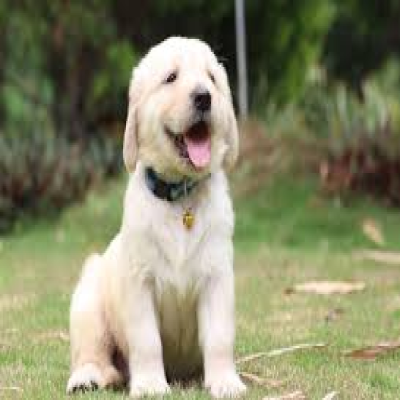
Golden retriver
Looking for a Golden retriver pup , Please do fill the the CONTACT US form
Happybark team will call you to guide through the process of connecting with an ethical breeder for the furry companion
Happybark helps you as follows:
1. Video of pups to choose the best pup
2. Connect with ethical breeder
3. Health report to be submitted to the pet parent
4. No to puppy mill
5. Vaccinated with certificate
Average sizes and life expectancy of the breed.
HEIGHT
23-24 inches (male)
21.5-22.5 inches (female)
WEIGHT
65-75 pounds (male)
55-65 pounds (female)
LIFE EXPECTANCY
10-12 years
The Golden Retriever, an exuberant Scottish gundog of great beauty, stands among America's most popular dog breeds. They are serious workers at hunting and field work, as guides for the blind, and in search-and-rescue, enjoy obedience and other competitive events, and have an endearing love of life when not at work. The Golden Retriever is a sturdy, muscular dog of medium size, famous for the dense, lustrous coat of gold that gives the breed its name. The broad head, with its friendly and intelligent eyes, short ears, and straight muzzle, is a breed hallmark. In motion, Goldens move with a smooth, powerful gait, and the feathery tail is carried, as breed fanciers say, with a 'merry action.
The most complete records of the development of the Golden Retriever are included in the record books that were kept from 1835 until about 1890 by the gamekeepers at the Guisachan (pronounced Gooeesicun) estate of Lord Tweedmouth at Inverness-Shire, Scotland. These records were released to public notice in Country Life in 1952, when Lord Tweedmouth's great-nephew, the sixth Earl of Ilchester, historian and sportsman, published material that had been left by his ancestor.
They provided factual confirmation to the stories that had been handed down through generations. Goldens are outgoing, trustworthy, and eager-to-please family dogs, and relatively easy to train. They take a joyous and playful approach to life and maintain this puppyish behavior into adulthood. These energetic, powerful gundogs enjoy outdoor play. For a breed built to retrieve waterfowl for hours on end, swimming and fetching are natural pastimes.
General Appearance — a symmetrical, powerful, active dog, sound and well put together, not clumsy nor long in the leg, displaying a kindly expression and possessing a personality that is eager, alert and self-confident. Primarily a hunting dog, he should be shown in hard working condition. Over-all appearance, balance, gait and purpose to be given more emphasis than any of his component parts.
Faults: Any departure from the described ideal shall be considered faulty to the degree to which it interferes with the breed’s purpose or is contrary to breed character.
Size, Proportion, Substance — Males 23-24 inches in height at withers; females 21 1/2-22 1/2 inches. Dogs up to one inch above or below standard size should be proportionately penalized. Deviation in height of more than one inch from the standard shall disqualify.
Length from breastbone to point of buttocks slightly greater than height at withers in ratio of 12:11. Weight for dogs 65-75 pounds; bitches 55-65 pounds.
Head — broad in skull, slightly arched laterally and longitudinally without prominence of frontal bones (forehead) or occipital bones. Stop well defined but not abrupt. Foreface deep and wide, nearly as long as skull. Muzzle straight in profile, blending smoothly and strongly into skull; when viewed in profile or from above, slightly deeper and wider at stop than at tip. No heaviness in flews. Removal of whiskers is permitted but not preferred.
Eyes — friendly and intelligent in expression, medium large with dark, close-fitting rims, set well apart and reasonably deep in sockets. Color preferably dark brown; medium brown acceptable. Slant eyes and narrow, triangular eyes detract from correct expression and are to be faulted. No white or haw visible when looking straight ahead. Dogs showing evidence of functional abnormality of eyelids or eyelashes (such as, but not limited to, trichiasis, entropion, ectropion, or distichiasis) are to be excused from the ring.
Ears — rather short with front edge attached well behind and just above the eye and falling close to cheek. When pulled forward, tip of ear should just cover the eye. Low, hound-like ear set to be faulted.
Nose — black or brownish black, though fading to a lighter shade in cold weather not serious. Pink nose or one seriously lacking in pigmentation to be faulted.
Teeth — scissors bite, in which the outer side of the lower incisors touches the inner side of the upper incisors. Undershot or overshot bite is a disqualification. Misalignment of teeth (irregular placement of incisors) or a level bite (incisors meet each other edge to edge) is undesirable, but not to be confused with undershot or overshot. Full dentition. Obvious gaps are serious faults.
Neck, Topline, Body
Neck — medium long, merging gradually into well laid back shoulders, giving sturdy, muscular appearance. Untrimmed natural ruff. No throatiness.
Back line — strong and level from withers to slightly sloping croup, whether standing or moving. Sloping back line, roach or sway back, flat or steep croup to be faulted.
Body — well-balanced, short coupled, deep through the chest.
Chest between forelegs at least as wide as a man’s closed hand including thumb, with well developed forechest. Brisket extends to elbow. Ribs long and well sprung but not barrel shaped, extending well towards hindquarters. Loin short, muscular, wide and deep, with very little tuck-up. Slabsidedness, narrow chest, lack of depth in brisket, excessive tuck-up, flat or steep croup to be faulted.
Tail — well set on, thick and muscular at the base, following the natural line of the croup. Tail bones extend to, but not below, the point of hock. Carried with merry action, level or with some moderate upward curve; never curled over back nor between legs.
Forequarters — muscular, well co-ordinated with hindquarters and capable of free movement. Shoulder blades long and well laid back with upper tips fairly close together at withers. Upper arms appear about the same length as the blades, setting the elbows back beneath the upper tip of the blades, close to the ribs without looseness. Legs, viewed from the front, straight with good bone, but not to the point of coarseness. Pasterns short and strong, sloping slightly with no suggestion of weakness. Dewclaws on forelegs may be removed, but are normally left on.
Feet — medium size, round, compact and well knuckled, with thick pads. Excess hair may be trimmed to show natural size and contour. Splayed or hare feet to be faulted.
Hindquarters — Broad and strongly muscled. Profile of croup slopes slightly; the pelvic bone slopes at a slightly greater angle (approximately 30 degrees from horizontal). In a natural stance, the femur joins the pelvis at approximately a 90-degree angle; stifles well bent; hocks well let down with short, strong rear pasterns. Feet as in front. Legs straight when viewed from rear. Cow-hocks, spread hocks, and sickle hocks to be faulted.
Coat — Dense and water repellent with good undercoat. Outer coat firm and resilient, neither coarse nor silky, lying close to body; may be straight or wavy. Untrimmed natural ruff; moderate feathering on back of forelegs and on under-body; heavier feathering on front of neck, back of thighs and underside of tail.
Coat on head, paws and front of legs is short and even. Excessive length, open coats and limp, soft coats are very undesirable. Feet may be trimmed and stray hairs neatened, but the natural appearance of coat or outline should not be altered by cutting or clipping.
Color — rich, lustrous golden of various shades. Feathering may be lighter than rest of coat. With the exception of graying or whitening of face or body due to age, any white marking, other than a few white hairs on the chest, should be penalized according to its extent. Allowable light shadings are not to be confused with white markings. Predominant body color which is either extremely pale or extremely dark is undesirable. Some latitude should be given to the light puppy whose coloring shows promise of deepening with maturity. Any noticeable area of black or other off-color hair is a serious fault.
Gait — when trotting, gait is free, smooth, powerful and well co-ordinated, showing good reach. Viewed from any position, legs turn neither in nor out, nor do feet cross or interfere with each other. As speed increases, feet tend to converge toward center line of balance. It is recommended that dogs be shown on a loose lead to reflect true gait.
Temperament — friendly, reliable and trustworthy. Quarrelsomeness or hostility towards other dogs or people in normal situations, or an unwarranted show of timidity or nervousness, is not in keeping with Golden Retriever character. Such actions should be penalized according to their significance.
Health
Goldens are generally healthy dogs, and responsible breeders will screen their breeding stock for health conditions including elbow and hip dysplasia; eye conditions such as juvenile cataracts, pigmentary uveitis, and progressive retinal atrophy; and certain heart diseases, including subvalvular aortic stenosis. The Golden's ears should be checked weekly for signs of infection, and the teeth should be brushed often.
Recommended Health Tests From the National Breed Club:
- Hip Evaluation
- Neuronal Ceroid Lipofuscinosis 5 (Golden Retriever) (NCL, NCL5) - DNA Test
- Elbow Evaluation
- Cardiac Exam
- Ophthalmologist Evaluation
Grooming
Goldens heavily shed their thick, water-repellant double coat once or twice a year, and they also shed more moderately on a continuous basis. Most of the time, a good brushing-out with a slicker brush once or twice a week will remove much of the dead hair before it has a chance to fall onto the furniture. During times of heavy shedding, these brushing sessions turn into daily affairs. Baths help to loosen the dead hairs, but the dog must be completely dry before brushing begins. Otherwise, Goldens only need occasional baths to keep them clean. As with all breeds, the Golden's nails should be trimmed regularly.
Exercise
Like most Sporting breeds, Goldens need plenty of daily exercise. A Golden who doesn't get enough exercise is likely to engage in undesirable behavior. Goldens make great companions on long runs and bike rides, although consultation with a vet is recommended before starting strenuous or high-impact activities that might cause stress to the dog's bones and joints. Many Goldens happily get their exercise on hunting trips or at field trials, as well as by participating in canine sports such as agility, obedience, and tracking.
Training
As with all breeds, early socialization and puppy training classes are recommended. Gently exposing the puppy to a wide variety of people, places, and situations between the ages of seven weeks and four months will help the Golden develop into a well-adjusted, well-mannered adult. Puppy training classes serve as part of the socialization process and help the owner learn to recognize and correct any bad habits that may be developing. Obedience training strengthens the bond between dog and owner'¿a Golden wants nothing more than to please his human. Golden Retrievers are outgoing, loyal, and eager to do your bidding, which makes them very easy to train.
Nutrition
A high-quality dog food appropriate for the dog's age (puppy, adult, or senior) will have all the nutrients the breed needs. Some Goldens can become overweight, so watch your dog's calorie consumption and weight level. If you choose to give your dog treats, do so in moderation. Treats can be an important aid in training, but giving too many can cause obesity. Give table scraps sparingly, if at all, especially avoiding cooked bones and foods with high fat content. Learn about which human foods are safe for dogs, and which are not. Check with your vet if you have any concerns about your dog's weight or diet.
Leave Your Comment
call us
+91 7660020250
Copyrights © 2024 happybark all right reserved.
Popular Search
- Farmina vet life obesity
- Royal canin satiety weight management
- Drools vet pro obesity
- Farmina vet life gastro