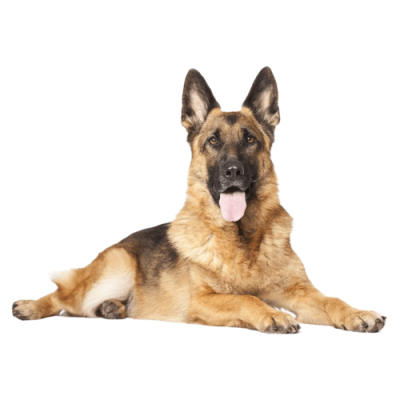
German Shepherd
Looking for a German shepherd pup , Please do fill the the CONTACT US form
Happybark team will call you to guide through the process of connecting with an ethical breeder for the furry companion
Happybark helps you as follows:
1. Video of pups to choose the best pup
2. Connect with ethical breeder
3. Health report to be submitted to the pet parent
4. No to puppy mill
5. Vaccinated with certificate
German Shepherd
HEIGHT
24-26 inches (male)
22-24 inches (female)
WEIGHT
65-90 pounds (male)
50-70 pounds (female)
LIFE EXPECTANCY
7-10 years
The Breed Standard
Breed Standard: A description of the ideal dog of each recognized breed, to serve as an ideal against which dogs are judged at shows, originally laid down by a parent breed club and accepted officially by national or international bodies.
General Appearance: The first impression of a good German Shepherd Dog is that of a strong, agile, well muscled animal, alert and full of life. It is well balanced, with harmonious development of the forequarter and hindquarter. The dog is longer than tall, deep-bodied, and presents an outline of smooth curves rather than angles. It looks substantial and not spindly, giving the impression, both at rest and in motion, of muscular fitness and nimbleness without any look of clumsiness or soft living. The ideal dog is stamped with a look of quality and nobility - difficult to define, but unmistakable when present. Secondary sex characteristics are strongly marked, and every animal gives a definite impression of masculinity or femininity, according to its sex.
Temperament: The breed has a distinct personality marked by direct and fearless, but not hostile, expression, self-confidence and a certain aloofness that does not lend itself to immediate and indiscriminate friendships. The dog must be approachable, quietly standing its ground and showing confidence and willingness to meet overtures without itself making them. It is poised, but when the occasion demands, eager and alert; both fit and willing to serve in its capacity as companion, watchdog, blind leader, herding dog, or guardian, whichever the circumstances may demand. The dog must not be timid, shrinking behind its master or handler; it should not be nervous, looking about or upward with anxious expression or showing nervous reactions, such as tucking of tail, to strange sounds or sights. Lack of confidence under any surroundings is not typical of good character. Any of the above deficiencies in character which indicate shyness must be penalized as very serious faults and any dog exhibiting pronounced indications of these must be excused from the ring. It must be possible for the judge to observe the teeth and to determine that both testicles are descended. Any dog that attempts to bite the judge must be disqualified. The ideal dog is a working animal with an incorruptible character combined with body and gait suitable for the arduous work that constitutes its primary purpose.
Size, Proportion, Substance: The desired height for males at the top of the highest point of the shoulder blade is 24 to 26 inches; and for bitches, 22 to 24 inches. The German Shepherd Dog is longer than tall, with the most desirable proportion as 10 to 8½. The length is measured from the point of the prosternum or breastbone to the rear edge of the pelvis, the ischial tuberosity. The desirable long proportion is not derived from a long back, but from overall length with relation to height, which is achieved by length of forequarter and length of withers and hindquarter, viewed from the side.
Head: The head is noble, cleanly chiseled, strong without coarseness, but above all not fine, and in proportion to the body. The head of the male is distinctly masculine, and that of the bitch distinctly feminine. The expression keen, intelligent and composed. Eyes of medium size, almond shaped, set a little obliquely and not protruding. The color is as dark as possible. Ears are moderately pointed, in proportion to the skull, open toward the front, and carried erect when at attention, the ideal carriage being one in which the center lines of the ears, viewed from the front, are parallel to each other and perpendicular to the ground. A dog with cropped or hanging ears must be disqualified. Seen from the front the forehead is only moderately arched, and the skull slopes into the long, wedge-shaped muzzle without abrupt stop. The muzzle is long and strong, and its topline is parallel to the topline of the skull. Nose black. A dog with a nose that is not predominantly black must be disqualified. The lips are firmly fitted. Jaws are strongly developed. Teeth - 42 in number - 20 upper and 22 lower - are strongly developed and meet in a scissors bite in which part of the inner surface of the upper incisors meet and engage part of the outer surface of the lower incisors. An overshot jaw or a level bite is undesirable. An undershot jaw is a disqualifying fault. Complete dentition is to be preferred. Any missing teeth other than first premolars is a serious fault.
Neck, Topline, Body: The neck is strong and muscular, clean-cut and relatively long, proportionate in size to the head and without loose folds of skin. When the dog is at attention or excited, the head is raised and the neck carried high; otherwise typical carriage of the head is forward rather than up and but little higher than the top of the shoulders, particularly in motion. Topline - The withers are higher than and sloping into the level back. The back is straight, very strongly developed without sag or roach, and relatively short. The whole structure of the body gives an impression of depth and solidity without bulkiness. Chest - Commencing at the prosternum, it is well filled and carried well down between the legs. It is deep and capacious, never shallow, with ample room for lungs and heart, carried well forward, with the prosternum showing ahead of the shoulder in profile. Ribs well sprung and long, neither barrel-shaped nor too flat, and carried down to a sternum which reaches to the elbows. Correct ribbing allows the elbows to move back freely when the dog is at a trot. Too round causes interference and throws the elbows out; too flat or short causes pinched elbows
Health
Most German Shepherds are healthy dogs. A responsible breeder will screen breeding stock for health conditions such as degenerative myelopathy and elbow and hip dysplasia. German Shepherd Dogs can experience bloat, a sudden and life-threatening swelling of the abdomen, and owners should educate themselves about its symptoms and what to do should bloat occur.
Grooming
The German Shepherd Dog has a medium-length, double coat consisting of a dense, harsh, and close-lying outer coat with a softer undercoat. The breed is easy to maintain, usually requiring just a quick brushing every few days or so to help remove loose hairs, but they do shed more profusely once or twice a year. During these periods, more frequent brushing will help control the amount of hair that ends up around the house and on the furniture. The German Shepherd only needs an occasional bath. It is important to trim or grind his nails every month if they are not worn down naturally, as overly long nails can cause pain and structural issues.
Exercise
As a very active and athletic breed, the German Shepherd requires lots of exercise for his physical and mental well-being. A dog who is not exercised enough will become frustrated and likely to develop undesirable behaviors. With a puppy, you can start with short daily walks, as well as play sessions in a safely fenced area. Remember to not let the dog off leash, as even the best-trained dog can become distracted and not follow every command. Participating in canine activities such as agility, herding, tracking, and dock diving provides excellent physical and mental exercise and is fun and rewarding for both dog and owner.
Nutrition
A high-quality dog food appropriate for the dog's age (puppy, adult, or senior) will have all the nutrients the breed needs. Table scraps can cause digestive upset, so only give them sparingly, if at all, especially avoiding cooked bones and foods with high fat content. Small pieces of biscuit or the dog's kibble can be used as treats for training. If you are feeding a high-quality food, vitamin and mineral supplements should not be necessary, although adding small quantities of yogurt, cooked vegetables, or eggs to the food can be beneficial. Learn about which human foods are safe for dogs, and which are not. Check with your vet if you have any concerns about your dog's weight or diet.
Leave Your Comment
call us
+91 7660020250
Copyrights © 2024 happybark all right reserved.
Popular Search
- Farmina vet life obesity
- Royal canin satiety weight management
- Drools vet pro obesity
- Farmina vet life gastro